The efficiency of light utilization in Pancake optics has become a critical topic in the development of next-generation display technologies. As the demand for compact, high-resolution displays grows, particularly in augmented reality (AR) and virtual reality (VR) applications, understanding and optimizing Pancake light efficiency is more important than ever. This article explores the key aspects of Pancake optics, their advantages, challenges, and the latest advancements in improving light utilization.
Understanding Pancake Optics
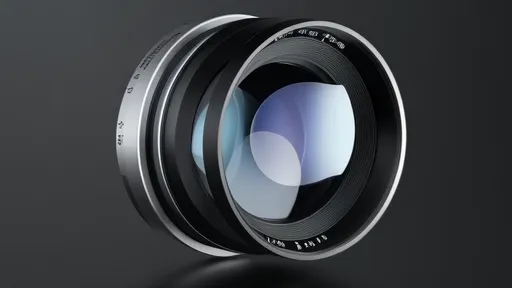
Pancake optics refer to a folded optical design that allows for a significantly slimmer form factor compared to traditional refractive lenses. By utilizing polarization-based folding, light is bounced multiple times within a compact space before reaching the viewer's eyes. This design is particularly advantageous for AR/VR headsets, where reducing weight and bulk while maintaining high image quality is paramount.
The term "Pancake" comes from the flat, layered structure of these optics, resembling the thin layers of a pancake stack. Unlike conventional optics that rely on thick lenses to achieve focus, Pancake optics achieve similar results through clever light manipulation in a fraction of the space. However, this folding comes with inherent light efficiency challenges that researchers and manufacturers are actively addressing.
Light Efficiency Challenges in Pancake Optics
One of the primary drawbacks of Pancake optics is light loss during the multiple reflection process. Each time light reflects off a surface or passes through a polarizer, some intensity is lost. Typical Pancake designs might involve three or more reflections before light reaches the eye, potentially losing 50% or more of the original light intensity. This becomes particularly problematic when trying to maintain bright, vibrant images while keeping power consumption low.
Another significant challenge comes from the polarization-dependent nature of Pancake optics. Since the design relies on maintaining specific polarization states, any imperfections in polarization preservation lead to additional light loss. This includes issues like depolarization by the display panel itself or imperfect polarization conversion in the optical stack. Manufacturers must carefully balance these factors when designing Pancake-based systems.
Recent Advancements in Light Utilization
The display industry has made notable progress in improving Pancake light efficiency through several innovative approaches. One breakthrough involves the development of ultra-high-efficiency polarizers that maintain polarization purity while minimizing absorption losses. These advanced polarizers can achieve transmission efficiencies above 99% for the desired polarization state, compared to traditional polarizers that might only reach 90-95%.
Another promising direction is the integration of reflective polarizers and quarter-wave plates with improved angular performance. Since Pancake optics involve light entering at various angles, maintaining consistent polarization conversion across all angles is crucial. New materials and coating techniques have enabled wider angular acceptance while reducing unwanted reflections and scatter.
Material Innovations Driving Efficiency
Material science plays a pivotal role in enhancing Pancake light efficiency. Novel optical polymers with exceptionally low birefringence help maintain polarization integrity throughout the optical path. These materials reduce the depolarization effects that would otherwise lead to light loss and ghosting artifacts in the final image.
Additionally, advancements in anti-reflection coatings specifically optimized for Pancake optics have shown remarkable improvements. Multi-layer nano-coatings can now achieve reflectivity below 0.2% per surface across the visible spectrum, dramatically reducing the light lost at each air-material interface. When applied to all surfaces in a Pancake lens assembly, these coatings can recover significant amounts of otherwise lost light.
System-Level Optimization Techniques
Beyond component-level improvements, system designers are finding clever ways to maximize Pancake light efficiency through holistic approaches. One method involves carefully tailoring the display's emission characteristics to better match the optics' polarization requirements. By optimizing the microdisplay's output polarization and angular distribution, engineers can ensure more light makes it through the entire optical path.
Another system-level approach incorporates adaptive brightness compensation. By monitoring real-time light throughput and dynamically adjusting the display brightness accordingly, systems can maintain consistent perceived brightness while optimizing power consumption. This becomes especially valuable in battery-powered AR/VR devices where every lumen counts.
The Future of Pancake Light Efficiency
Looking ahead, the trajectory for Pancake light efficiency appears promising. Emerging technologies like metasurface optics and computational displays could potentially revolutionize how we approach light utilization in folded optics. Researchers are exploring ways to integrate these novel approaches with Pancake designs to achieve unprecedented levels of efficiency and image quality.
Another exciting frontier involves the development of "lossless" Pancake optics through advanced light recycling techniques. By capturing and redirecting light that would typically be lost in conventional designs, these next-generation systems could dramatically improve overall efficiency. Early prototypes have shown potential for reducing light loss by up to 30% compared to current implementations.
As display technology continues to evolve, the importance of Pancake light efficiency will only grow. The ongoing miniaturization of AR/VR devices, coupled with increasing demands for higher brightness and lower power consumption, makes this an area ripe for continued innovation. Through material science breakthroughs, optical design refinements, and system-level optimizations, the display industry is steadily overcoming the light efficiency challenges inherent to Pancake optics.

By /Aug 15, 2025
By /Aug 15, 2025
By /Aug 15, 2025
By /Aug 15, 2025

By /Aug 15, 2025

By /Aug 15, 2025
By /Aug 15, 2025

By /Aug 15, 2025
By /Aug 15, 2025

By /Aug 15, 2025

By /Aug 15, 2025

By /Aug 15, 2025

By /Aug 15, 2025

By /Aug 15, 2025

By /Aug 15, 2025

By /Aug 15, 2025

By /Aug 15, 2025

By /Aug 15, 2025

By /Aug 15, 2025

By /Aug 15, 2025
