Brain-Computer Interface Chips

Aug 15, 2025 By

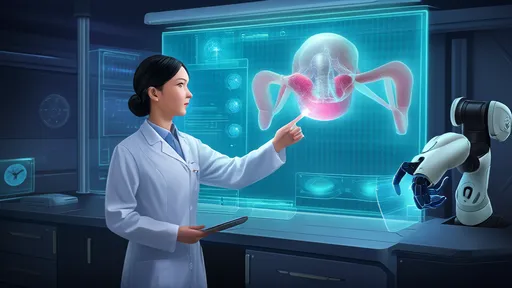
The concept of brain-computer interfaces (BCIs) has long been the stuff of science fiction, but recent advancements in neural technology are bringing it closer to reality. Among the most groundbreaking developments are brain-computer chips—tiny, implantable devices designed to bridge the gap between human cognition and artificial systems. These chips promise to revolutionize medicine, communication, and even human augmentation, raising both excitement and ethical questions.

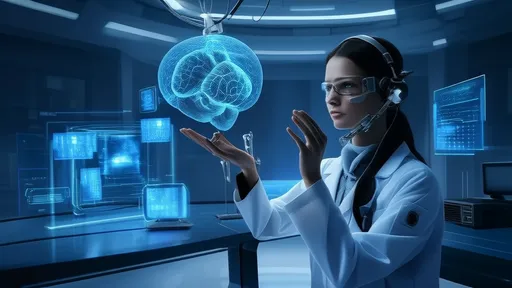
At the core of this technology lies the ability to decode neural signals and translate them into actionable commands. Companies like Neuralink, founded by Elon Musk, are pioneering high-bandwidth brain implants that aim to treat neurological disorders, restore mobility to paralyzed patients, and eventually enable direct communication between humans and machines. Early trials have shown promising results, with paralyzed individuals controlling computers and robotic limbs through thought alone.

How Brain-Computer Chips Work

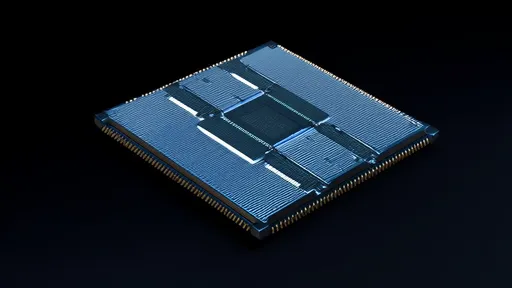
Brain-computer chips function by interfacing directly with neurons, the brain's primary signaling cells. These chips are embedded with microelectrodes that detect electrical activity in the brain, which is then processed by onboard algorithms. The data can be wirelessly transmitted to external devices, allowing for real-time interaction. For instance, a person with a spinal cord injury could use the chip to move a prosthetic arm simply by imagining the motion.

One of the biggest challenges has been achieving a stable, long-term connection between the chip and brain tissue. The brain's immune response often leads to scar tissue formation around implants, degrading signal quality over time. Researchers are experimenting with flexible, biocompatible materials to minimize this reaction. Some teams are even developing "neural lace" technology—a mesh-like electrode array that integrates seamlessly with brain tissue.

Medical Breakthroughs and Beyond

The medical applications of brain-computer chips are staggering. Beyond restoring movement to the paralyzed, these devices could treat conditions like epilepsy, Parkinson's disease, and chronic pain by modulating abnormal neural activity. In some experimental cases, chips have been used to restore partial vision to the blind by bypassing damaged optic nerves and stimulating the visual cortex directly.

However, the potential extends far beyond healthcare. Tech visionaries speculate about a future where brain chips enhance cognitive abilities, enabling instant access to information or even telepathic communication. While this may sound like dystopian fiction, companies are already exploring "memory prosthetics" to combat dementia and brain implants for augmented reality integration.

Ethical and Societal Implications

As with any transformative technology, brain-computer chips come with profound ethical dilemmas. Privacy concerns top the list—how can we ensure neural data, which may include intimate thoughts and emotions, remains secure? There are also fears of inequality, where only the wealthy can afford cognitive enhancements, creating a new class divide. Regulatory bodies are scrambling to establish guidelines, but the pace of innovation often outstrips policy development.

Another critical debate centers on identity and autonomy. If a chip can influence or override neural processes, to what extent does it alter a person's sense of self? Philosophers and neuroscientists alike warn against underestimating the psychological impact of merging silicon with consciousness. Public acceptance remains a hurdle, with many wary of the idea of "hacking" the human brain.

The Road Ahead

Despite the challenges, investment in brain-computer chip technology continues to surge. Military agencies see potential for superhuman soldiers, while educators dream of accelerated learning through direct knowledge uploads. Meanwhile, the gaming industry envisions fully immersive experiences controlled purely by thought. The next decade will likely see the first commercial applications, starting with medical devices before expanding into consumer markets.

What makes this field unique is its interdisciplinary nature—neuroscience, materials engineering, AI, and ethics must all converge to make brain-computer interfaces viable. As research progresses, society will need to grapple with fundamental questions about what it means to be human in an age where minds can merge with machines. One thing is certain: the development of brain-computer chips marks a pivotal moment in our technological evolution, with implications that will resonate for generations to come.
Recommend Posts
IT

Technical Debt Management

By /Aug 15, 2025

The concept of technical debt is no stranger to software development teams, yet its management remains one of the most overlooked aspects of project sustainability. Unlike financial debt, technical debt accumulates silently, often under the guise of rapid delivery or short-term gains. Left unchecked, it can cripple a project, turning what was once a nimble codebase into a tangled web of inefficiencies and bugs. The key to effective technical debt management lies not in avoiding it entirely—this is often impractical—but in understanding its nuances and mitigating its long-term impact.
IT

Developer Health

By /Aug 15, 2025

The glow of monitors illuminates tired eyes as fingers dance across keyboards long past midnight. This romanticized image of the dedicated programmer has become a dangerous stereotype in the tech industry, masking a growing health epidemic among software developers. Behind every sleek app and revolutionary platform lies a workforce grappling with physical and mental health challenges that the industry has systematically overlooked.
IT

Zero Trust Cost

By /Aug 15, 2025

The concept of zero trust security has gained significant traction in recent years, promising a more robust approach to cybersecurity by eliminating implicit trust within networks. However, as organizations rush to adopt this framework, many are discovering that the financial implications are far more complex than initially anticipated. The true cost of zero trust extends beyond software licenses and hardware upgrades—it encompasses cultural shifts, operational overhauls, and long-term maintenance challenges that often catch enterprises off guard.
IT

Chip Yield Rate

By /Aug 15, 2025

The semiconductor industry has long been driven by the relentless pursuit of higher chip yields, a metric that directly impacts profitability and supply chain efficiency. As process nodes shrink and designs grow more complex, maintaining optimal yield rates has become a formidable challenge for foundries and integrated device manufacturers alike. Yield management is no longer just a manufacturing concern—it has evolved into a strategic imperative that influences everything from product roadmaps to customer relationships.
IT

Computing Power Futures"

By /Aug 15, 2025

The global computing power market is undergoing a quiet revolution as financial institutions and tech giants alike begin trading compute futures - derivative contracts that allow buyers to lock in prices for future computing capacity. What began as niche hedging instruments for cryptocurrency miners has evolved into a sophisticated marketplace attracting hedge funds, cloud providers, and AI labs scrambling to secure the silicon needed to power tomorrow's algorithms.
IT

Code Archaeology: Algorithms

By /Aug 15, 2025

The world of computer science is filled with fascinating stories of how algorithms came to be. Code archaeology, the practice of digging through historical codebases and technical documents, reveals surprising origins and evolutions of the algorithms we now take for granted. What emerges from these investigations is not just technical insight but a rich tapestry of human ingenuity, collaboration, and sometimes pure serendipity.
IT

Game Learning: Cryptography

By /Aug 15, 2025

The intersection of gaming and education has always been fertile ground for innovative learning approaches. Among the most fascinating developments in this space is the use of games to teach cryptography - the ancient art of secret writing that has become fundamental to our digital age. What was once the domain of spies and military strategists has now entered mainstream education through engaging gameplay mechanics that make complex concepts accessible to learners of all ages.
IT

Animation Analysis: The Internet

By /Aug 15, 2025

The internet has become the central nervous system of modern civilization, a vast and intricate web connecting billions of devices, ideas, and people. Its evolution from a rudimentary communication tool to a sprawling digital ecosystem has reshaped every facet of human life—how we work, learn, socialize, and even perceive reality. Yet, as we navigate this boundless virtual landscape, we must grapple with its dual nature: a force for unprecedented progress and a breeding ground for new forms of chaos.
IT

Virtual Disassembly: Chips

By /Aug 15, 2025

The world of semiconductor technology has always been shrouded in a veil of complexity, but few things demystify it as effectively as a virtual teardown. Unlike physical dismantling, which risks damaging delicate components, virtual dissection allows engineers and enthusiasts alike to explore the intricate architecture of modern chips without ever touching a soldering iron. This approach has become indispensable in an era where transistors are measured in nanometers and a single chip can contain billions of them.
IT

Fault Sandbox: Distributed

By /Aug 15, 2025

The concept of fault sandboxing has emerged as a critical paradigm in distributed systems architecture, offering organizations a structured approach to failure management in increasingly complex digital ecosystems. As enterprises continue their rapid adoption of microservices, cloud-native applications, and globally distributed infrastructure, the fault sandbox methodology provides a framework for containing failures while maintaining system resilience.
IT

Programmable Materials

By /Aug 15, 2025

The world of materials science is undergoing a quiet revolution as researchers push the boundaries of what we consider "smart" materials. Programmable materials represent a paradigm shift from passive substances to dynamic systems that can change their properties on demand, blurring the line between materials and machines.
IT

Environment-Powered Energy

By /Aug 15, 2025

The concept of environmental energy harvesting has emerged as a transformative approach to powering our world sustainably. As traditional energy sources face depletion and environmental concerns mount, researchers and engineers are turning to innovative methods that harness energy from natural surroundings. This shift represents not just a technological evolution but a fundamental rethinking of how we interact with our planet's resources.
IT

Brain-Computer Interface Chips

By /Aug 15, 2025

The concept of brain-computer interfaces (BCIs) has long been the stuff of science fiction, but recent advancements in neural technology are bringing it closer to reality. Among the most groundbreaking developments are brain-computer chips—tiny, implantable devices designed to bridge the gap between human cognition and artificial systems. These chips promise to revolutionize medicine, communication, and even human augmentation, raising both excitement and ethical questions.
IT

Space Internet

By /Aug 15, 2025

The concept of a space-based internet, often referred to as the space internet, is rapidly transitioning from science fiction to tangible reality. Companies like SpaceX, OneWeb, and Amazon’s Project Kuiper are leading the charge, deploying constellations of low-Earth orbit (LEO) satellites to provide global broadband coverage. This ambitious endeavor promises to bridge the digital divide, connecting remote and underserved regions while revolutionizing communication infrastructure worldwide. The implications are vast, touching everything from rural education to military operations, but the challenges—ranging from orbital debris to regulatory hurdles—are equally significant.
IT

Molecular Computation

By /Aug 15, 2025

The field of molecular computing has emerged as one of the most fascinating frontiers in modern technology, blending chemistry, biology, and computer science into a revolutionary approach to information processing. Unlike traditional silicon-based computers that rely on electronic signals, molecular computing harnesses the inherent properties of molecules to perform calculations, store data, and even make decisions.
IT

Deepfake Forensics

By /Aug 15, 2025

The rise of deepfake technology has ushered in a new era of digital deception, where hyper-realistic synthetic media can manipulate audio, video, and images with alarming accuracy. As these forgeries become increasingly sophisticated, the field of deepfake forensics has emerged as a critical battleground in the fight against misinformation. Researchers and cybersecurity experts are racing to develop advanced detection methods to distinguish between authentic and manipulated content, but the challenge grows more complex by the day.
IT

Genetic Data Privacy

By /Aug 15, 2025

The rapid advancement of genetic testing technologies has ushered in an era where individuals can unlock the secrets of their DNA with a simple saliva sample. Companies like 23andMe and AncestryDNA have made genetic testing accessible to millions, offering insights into ancestry, health predispositions, and even quirky traits like caffeine metabolism. Yet, beneath the surface of this scientific revolution lies a growing concern: the privacy of genetic data.
IT

Ethics of Autonomous Driving

By /Aug 15, 2025

The rapid advancement of autonomous vehicle technology has sparked intense ethical debates that go far beyond technical specifications and safety protocols. As self-driving cars transition from research labs to public roads, society finds itself grappling with profound moral questions that challenge our traditional understanding of responsibility, decision-making, and the value of human life in machine-governed systems.
IT

Regenerate the Title in English

By /Aug 15, 2025

The rapid integration of artificial intelligence (AI) into healthcare has ushered in a new era of medical innovation, but it has also raised complex questions about accountability. As AI systems increasingly assist in diagnostics, treatment recommendations, and even surgical procedures, the lines between human and machine responsibility have blurred. Who is liable when an AI-powered tool makes an error? How do we ensure ethical decision-making in algorithms that may impact lives? These are not just theoretical concerns—they are pressing issues that regulators, healthcare providers, and technologists must address as adoption accelerates.
IT

Algorithm Fairness

By /Aug 15, 2025

The concept of algorithmic fairness has emerged as a critical issue in the age of artificial intelligence and machine learning. As algorithms increasingly influence decisions in hiring, lending, law enforcement, and healthcare, concerns about bias and discrimination have taken center stage. The debate is no longer just about technical efficiency but also about the ethical implications of automated decision-making systems.